Free Newsletter

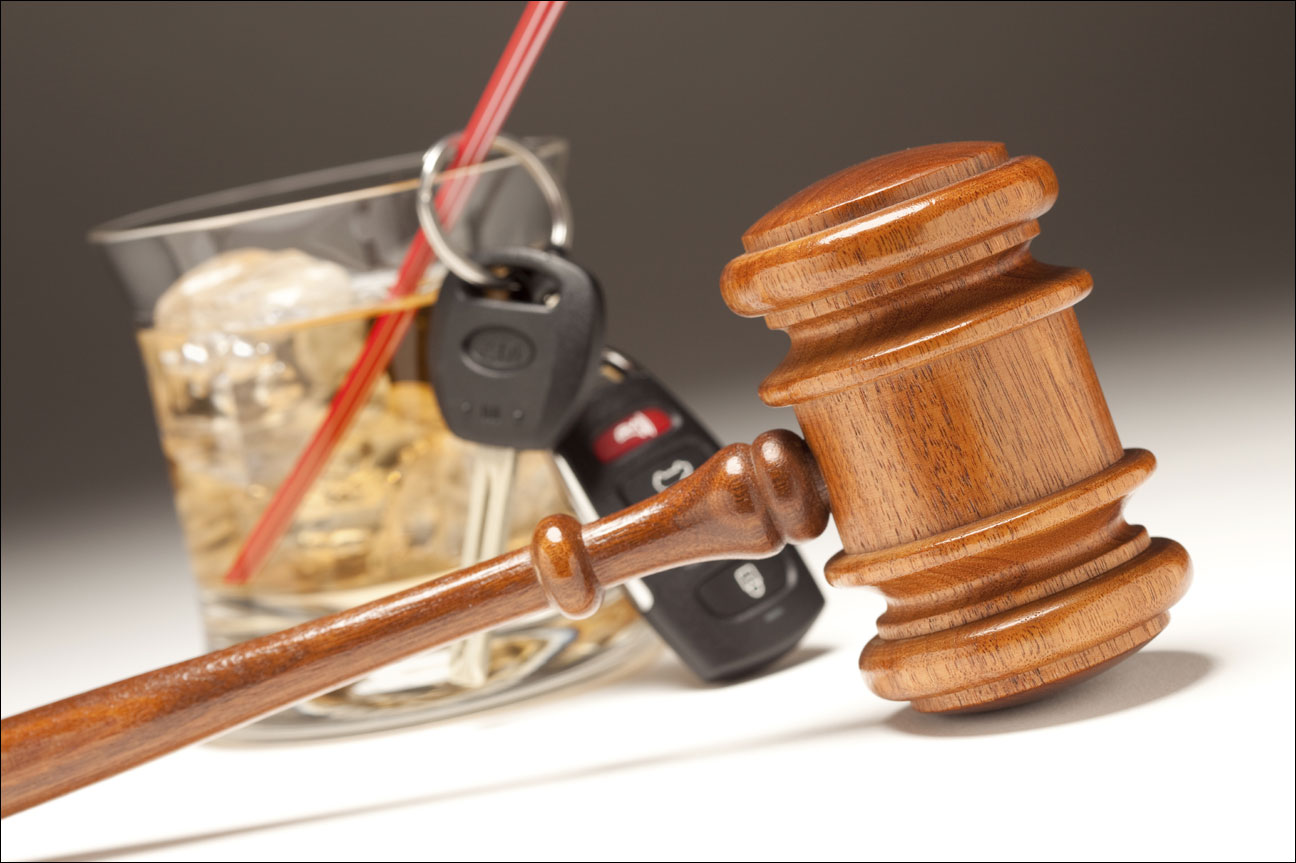
Appeals court upholds Milwaukee OWI conviction
MaryBeth Matzek, Freelance Editor//June 23, 2025//


 Listen to this article
IN BRIEF
- Appeals court affirms Nelson Holmes‘ OWI second offense conviction.
- 911 call excerpts ruled non-testimonial and properly admitted.
- Court says Miranda rights not violated during initial questioning.
The Court of Appeals District I upheld a man’s conviction of operating under the influence second offense, dismissing claims the Milwaukee Circuit Court improperly admitted evidence that was testimonial hearsay.
The state charged Nelson Holmes with operating under the influence, as a second offense, and operating a vehicle with a prohibited alcohol concentration, as a second offense, alleging he caused a two-car accident on N. 35th Street in Milwaukee while intoxicated on Jan. 15, 2021.
Holmes pled not guilty to both charges but was convicted in Milwaukee County Circuit Court.
According to the complaint, Holmes’ vehicle struck another vehicle containing driver, A.L, and a passenger, G.J. After officers Jordan Kunya and Luis Madrigal arrived on the scene, A.L. and G.J. said they believed Holmes was intoxicated and took his keys so he would not flee the scene.
Kunya contacted Holmes and noticed his eyes were glassy, his speech was slurred, he had difficulty standing and he smelled like alcohol. Holmes initially agreed to perform standard field sobriety test but was unable to complete the tests. Kunya arrested Holmes and had him taken to a hospital where his blood was tested and revealed to contain 0.312 g/100mL of ethanol.
At trial, the state moved to admit two recordings of the 911 calls that G.J. made to 911 after the accident. Holmes argued the admission of the 911 calls violated his rights to confront witnesses since G.J. did not testify in court, only A.L. The court decided to only admit limited portions of the calls — about 40 seconds of the first call where G.J. reported the accident and 20 seconds of the second call when the 911 operator establishes G.J.’s location, name and phone number.
The circuit court ruled — and the appeals court upheld — that the portions of the 911 calls admitted were not testimonial because their primary purpose was to enable law enforcement to respond to the accident that had occurred immediately prior to the 911 calls.
“The primary purpose of G.J.’s statements were not to create an out-of-court substitute for trial testimony relevant to later prosecution, but instead to seek police assistance in response to the car accident,” the court wrote. The call “was meant rather to obtain basic information about the current circumstances to assist police in responding to the car accident.”
Holmes also objected to show portions of footage from Kunya’s body camera at the scene of the accident. He said the officers’ first approach and questioning was a custodial interrogation and he was not read his Miranda rights. He argued that since the G.J. and A.L. had given the officers his car keys, he was in custody before they asked their first question. The court ruled that handing over Holmes’ keys did not transform the officers’ initial approach into a custodial interrogation.
The Appeals Court wrote Holmes’ statements at the scene occurred prior to his arrest and Holmes did not put forth an argument that he was subject to a custodial interrogation when he made those statements. In response, the state argued the circuit court properly admitted Holmes’ statements on the basis they were made voluntarily without prompting by the officers so he was not subject to interrogations requiring Miranda warnings.
“Holmes’ brief-in-chief does not address whether he was subject to interrogation and he declined to file a reply brief disputing the state’s argument. Therefore, we consider it conceded,” the Appeals Court wrote.
Related Articles
Related Content

Polls
 Loading ...
Legal News
- Wisconsin Supreme Court weighs judicial recusal rules
- Wisconsin settles Waupun prison death lawsuit for $3.75M
- Wisconsin settles $10M PFAS lawsuit against Tyco
- Poll: Most Americans think Supreme Court favors Trump
- FBI interviews Milwaukee officers in 2020 election probe
- Georgia-Pacific settles wrongful termination lawsuit
- Attorney reprimanded over witness payments
- Animal rights activists set for trial in beagle raid case
- Wisconsin ballot curing lawsuit seeks uniform voter rules
- Kenosha couple loses appeal in Brewers 50/50 raffle case
- State lawsuit seeks electronic ballots for disabled voters
- Attorney disbarred after sexual assault conviction
Case Digests
- Involuntary Medication-Competency to Stand Trial
- Informer Privilege Statute-Clear Error
- Sixth Amendment-Third-Party Perpetrator Evidence
- Plea Withdrawal-Manifest Injustice
- Ineffective Assistance of Counsel-Procedural Bar
- CHIPS Confidentiality-Remedial Versus Punitive Sanctions
- Insurance Law
- Breach of Contract-Rule 12(b)(6) Dismissal
- Constitutional Law-Qualified Immunity-First Amendment Retaliation
- Qualified Immunity-Excessive Force-Civil Rights
- Hostile Work Environment-Sexual Harassment
- Sufficiency of Evidence-McDonnell Douglas Framework