Free Newsletter

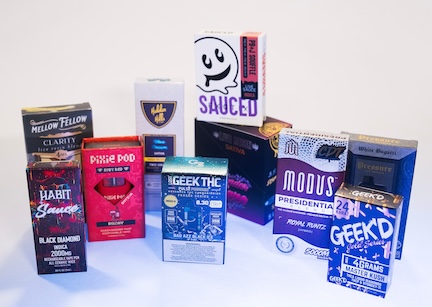
(USA Today Network) Shot for "High Stakes" project written by Gina Castro.
State vape law upheld amid possible Supreme Court clash
USA Today Network//April 30, 2026//


IN BRIEF
- Federal appeals court upheld Wisconsin’s 2023 vape registry law.
- Vape industry group WiscoFAST failed to block enforcement.
- Conflicting rulings in other states could trigger Supreme Court review.
A federal appeals court upheld Wisconsin’s 2023 law banning the sale of many vape brands, but another appeals district appears likely to block Iowa’s similar law – creating conflicting rulings that could be ripe for U.S. Supreme Court review.
For months, a coalition of vape store owners tried to block enforcement of the state law that requires them to sell only vapes listed on Wisconsin’s approved list. A federal judge denied their request shortly after the law went into effect Sept. 1, 2025.
The industry group Wisconsinites for Alternatives to Smoking and Tobacco (WiscoFAST), which warned the law could put smoke shops out of business, appealed to the 7th Circuit Court of Appeals. Oral arguments happened in December.
A three-judge panel issued their decision April 21, upholding the lower ruling and keeping the law in place.
“Although [WiscoFAST] have shown they would suffer irreparable harm under the state statute, the balance of harms and the public interest do not weigh in favor of enjoining enforcement of the state law,” wrote Chief Judge Michael Brennan.
Here’s what to know about the lawsuit and where the vape law stands.
Could Wisconsin’s vape law go to the U.S. Supreme Court?
The nation’s highest court only takes up about 1% of the cases appealed to them, so chances are slim.
But Marisa Katz, a deputy director at Mitchell Hamline School of Law’s Public Health Law Center, said challenges to other vape registry laws could be headed for a “circuit split,” making the Supreme Court more inclined to take it up.
In a pending case over Iowa’s vape law, judges on the 8th Circuit Court of Appeals were highly critical of the policy during oral arguments in January, with one calling it “parasitic” of federal law. Another federal appeals court is considering challenges to North Carolina and Virginia’s laws.
A decision hasn’t come in yet, and Katz said judges can appear to lean one way but ultimately make a different ruling. If the 8th Circuit does issue an opposite decision from the 7th Circuit, it would “make sense for the [Supreme Court] to weigh in” on that inconsistency, Katz said.
And it could have huge implications for other areas of public health law.
“If the Supreme Court were to take on this issue, the legal challenge we’re seeing in this particular context, including in Wisconsin, is essentially testing the boundary of the use of state police powers to regulate public health and safety over federally regulated products,” she said.
David Beaupre, the president of WiscoFAST and a plaintiff in the case, said their attorneys are watching for opinions to come down from the two other courts and are keeping open the possibility of going to the U.S. Supreme Court.
“This is important nationwide, for the entire nicotine vapor industry, because it’ll set precedence on other registry bills that either have been passed already in states or are currently being worked on in other states,” he said.
Could Wisconsin’s vape law be changed?
In the meantime, WiscoFAST is taking a different strategy: Going to state lawmakers and asking them to revisit the law that put the vape restrictions in place.
Beaupre said lawmakers he’s talked to are mostly concerned with restricting youth access – a goal shared by WiscoFAST, which supports a Tobacco 21 bill to align the state age to purchase tobacco products with federal law. Beaupre says the registry law instead limits access for adults who use vapes as a way to quit smoking cigarettes.
Public health experts have questioned the effectiveness of registry laws like the one in Wisconsin– so far, they have not proven useful in curbing youth access, Katz said, because they remove some brands from the shelves but keep other flavored options available.
Lobbying records and trends in other states suggest “big tobacco” companies pushed for the state registry laws to limit competition, Katz said.
Why are some vapes banned in Wisconsin?
The vape registry was attached as an amendment to a sweeping bill signed in December 2023 that overhauled regulations for alcohol, tobacco products and more.
The law requires vape manufacturers to certify to the state Department of Revenue that their products are approved by the U.S. Food and Drug Administration or were on the market by 2016 and applied for FDA approval by 2020.
Approved products are listed on the state’s public registry. If retailers are caught selling unlisted products, they face heavy fines. The list has 345 approved products, with recently added brands like flavored Loon Air+ and Leap Pods.
About 16 states have vape registry laws, according to Katz and the Public Health Law Center, and another 19 states are considering one.
What does this have to do with the federal hemp ban?
Smoke shop owners interviewed by the Milwaukee Journal Sentinel when the law took effect said that while now-illegal vapes took up a decent percentage of their inventory and revenue, the bulk of their sales are in hemp-based products. Some stores have adapted to the vape restrictions by adding snacks and beverages to boost sales, Beaupre said.
Shop owners are still concerned about a shakeup in federal hemp law that could essentially ban hemp-derived products this November. Consumers and businesses have lobbied lawmakers to reverse the ban, and President Donald Trump recently called on Congress to revisit the law.
Separate from the pending federal ban, Wisconsin’s law also requires electronic vaping devices that contain hemp to be certified and listed on the directory by the start of July to be sold in the state.
Related Articles
Related Content





Polls
 Loading ...
Legal News
- Crowley wins Wisconsin Democratic governor primary
- Milwaukee school board sues ex-member for overpayment
- Rudolph couple charged with felony child neglect
- Pound man sentenced to prison for shooting friend
- Winnebago County Judge Scott Woldt faces misconduct panel
- AI puts pressure on law firms’ billable hour model
- Madison police officer identified in fatal shooting
Case Digests
- Expert Testimony-Evidentiary Sufficiency
- Sixth Amendment-Speedy Trial Prejudice
- Reasonable Suspicion-Expanded Traffic Stop
- Tribal Sovereign Immunity-Indispensable Party
- Probable Cause-K-9 Stop Extension
- Prosecutorial Misconduct-Burden Shifting-Sexual Assault
- Jury Instructions-Harmless Error
- Evidence-Protective Search
- Fraud-Fifth Amendment-Sixth Amendment
- Multiple Bribes Enhancement-Loss Amount Calculation-Wire Fraud
- Protected Service Rights-Water Service Made Available
- First Amendment-Fourteenth Amendment-Viewpoint Discrimination in a Public Forum
Legal Tech
- The billable hour is not dead, but AI is chipping away at its prevalence
- NYC Bar provides roadmap for navigating AI privilege issues
- Litify launches AI tool to automate personal injury demand preparation
Legal Tech Directory
Wisconsin Law Journal connects 640K legal professionals with leading technology and service providers nationwide.