Free Newsletter

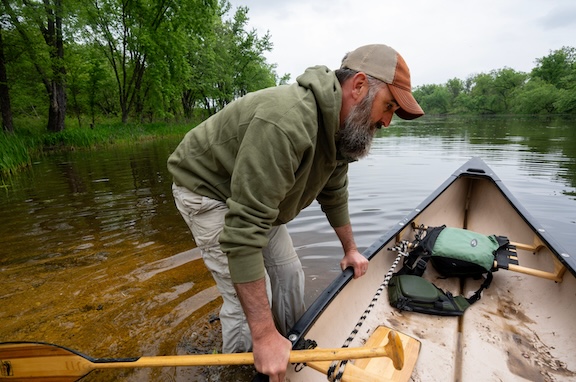
While on vacation, Wisconsin DNR conservation warden Ben Gruber gets ready to paddle the Lower Wisconsin State Riverway Thursday, May 16, 2024 near Lone Rock, Wisconsin. (USA Today Network photo)
Wisconsin DNR wardens faced union retaliation ruling
USA Today Network//April 10, 2026//


IN BRIEF
- Wisconsin Employment Relations Commission found DNR wardens faced retaliation for union advocacy.
- Ruling recommends expunging disciplinary records tied to union activity.
- Complaints include discrimination, harassment and toxic workplace culture.
MADISON – A Wisconsin Employment Relations Commission ruling found that wardens from the Department of Natural Resources were retaliated against for their work as representatives for the group’s labor union.
According to a ruling handed down by the WERC in March, two of the three members of the warden’s union were likely retaliated against by the DNR due to their advocacy on behalf of employees.
The ruling comes after Journal Sentinel reporting into allegations of a toxic work culture in the DNR program rife with retaliation and discrimination.
The ruling does not create any enforceable action but does recommend that the agency not continue that kind of action.
The order handed down states that the decision was to be placed in the personnel files of the complainants, that the letters of expectation issued in response to actions taken on behalf of the union be expunged from their records, and that all wardens receive a copy of the order by email.
Going forward, the agency isn’t to interfere with actions of the union taken on behalf of protecting its members.
Ben Gruber, the former president of the Conservation Wardens Local 1215 and a current candidate for the state Assembly, was one of the complainants in the case before the commission.
“I feel it’s just vindicating what we’ve been saying for 2½ years that our management operates unchecked and was really abusing their authority to retaliate and discriminate,” Gruber said in an interview. “It feels like the Employee Relations Commission here really confirms that over and over throughout their ruling.”
Wardens describe retaliation, discrimination and a toxic environment
In past years, members of the DNR’s warden program have raised concerns about the treatment of employees by the agency, chief among them retaliation for speaking up about concerns.
Gruber won a legal case after he was fired in 2020, and later reinstated to the agency.
His is one of a number of stories wardens shared with the Journal Sentinel describing retaliation, discrimination and a toxic atmosphere within the program. Wardens enforce laws and regulations for hunting, fishing and outdoor recreation, and sometimes can step in to perform similar duties to police officers.
The accounts shared by employees past and present give a portrait of larger problems affecting employees for decades. They allege a culture where sexual harassment was unchecked, management mistreated employees because of their sexual orientation or race, and leadership routinely retaliated when questioned by employees.
At least four employees over the last four years filed Equal Employment Opportunity Commission complaints, with some cases ending up in court.
Before his dismissal, Gruber spoke out about things he saw during his time in the recruit academy, including a trainer who singled out women with words and actions that he said made not only the women uncomfortable, but some of the men as well.
Gruber said he shared his concerns with a trusted person within the DNR who warned him against speaking out at the risk of retaliation. Gruber was dismissed as a warden in the first half of 2020. His superiors alleged that he had failed to wear the proper patches on his uniform, that he had failed to complete assignments, and that he failed to maintain equipment.
Gruber and his lawyer reached a settlement with the DNR over his firing, and he was rehired as a conservation warden. But he said the climate has been more of the same since he returned, citing a fear of being over-scrutinized or retaliated against.
He credits the agency for installing new leadership at the warden training academy and creating a better experience for recruits, as well as with conducting a climate survey for wardens in particular.
But he hasn’t witnessed many other changes.
He also holds firm in his belief that his firing was the result of retaliation, not because of his patches or some other issue. Gruber challenged authority with his concerns and faced consequences.
Marcus Medina, the new president of the union, did not respond to a request for an interview.
In an email, a spokesperson for the DNR referred the Journal Sentinel to comments in previous stories about the warden program, in which a spokesperson said that the agency “will continue to prioritize creating an inclusive workplace for all and responding to allegations based upon facts, providing all involved with due process.”
Gruber said the wardens haven’t yet heard anything from leadership.
“I guess I’ll await their response, but I anticipate they’ll probably continue to deny it,” he said. “One thing is that this ruling doesn’t have is any real consequence with it, so I won’t be surprised if they continue to operate as they have.”
He said that if the agency doesn’t start to address the issues retaliation has created, it’s only going to become more apparent to the public that there is an issue because they will see wardens leave the program, and a struggle to find new people to replace them.
“We continue to see significant turnover, really talented people leaving the agency, from young staff who have short tenures to people who have been here for 20 years,” he said. “We continue to see that turnover of people who are just very frustrated with the lack of accountability from management, and I do have concerns that it will continue to be hard to retain quality staff.”
The warden program isn’t the only portion of the DNR facing struggles with employee retention and happiness.
According to an internal employee engagement survey report obtained by the Journal Sentinel, many employees across the agency cite unhappiness in their jobs.
Employees described issues with managers not understanding the roles and responsibilities of the employees under them, gender roles limiting some employees, work-life balance and retaliation.
The report also highlighted strengths, such as the consistently high value placed on providing good service to Wisconsinites, and strong relationships between coworkers. Pay disparity was also an issue for employees, with many noting they could get more frequent pay raises in the private sector.
The report also suggests possible next steps for the department, including review and reflection by the agency’s engagement team; dissemination and discussion of the survey results; and targeted follow-up and deeper inquiry on specific issues raised by employees in the survey results.
Related Articles
Related Content




Polls
 Loading ...
Legal Tech
- How ransomware tactics against law firms are changing
- How large language models are leveling the personal injury playing field
- Attorney Share, Lawmatics integrate to automate law firm referrals
Legal News
- Wisconsin Legal 250 launches
- Lawsuit challenges Wisconsin absentee ballot guidance
- DOJ sues Milwaukee over police mask ordinance
- Chippewa DA questions sheriff’s credibility before primary
- State seeks suspension of Hannah Dugan’s law license
- Judge dismisses Wisconsin wake surfing lawsuit
- Wisconsin pilots online domestic abuse filing portal
Case Digests
- Informed Consent-Statutory Standing
- Zoning and Property Rights-Rental Restrictions
- Ineffective Assistance of Counsel-Evidence Omission
- Plain Error-Ineffective Assistance of Counsel
- Revocation Sentencing -Sentencing Factors
- Tax Claim Classification-Tax Sale Claims
- Race Discrimination-Employment Retaliation
- First Amendment-Pickering Balancing Test
- Procedural Reasonableness-Federal Sentencing Discretion
- Federal Officer Removal Statute-Climate Change Litigation
- Telephone Consumer Protection Act-Class Action
- Age Discrimination Employment Act-Sufficiency of Evidence