Free Newsletter

Fire truck antitrust lawsuits centralized in Wisconsin
Joe Schulz of Wisconsin Public Radio//April 8, 2026//
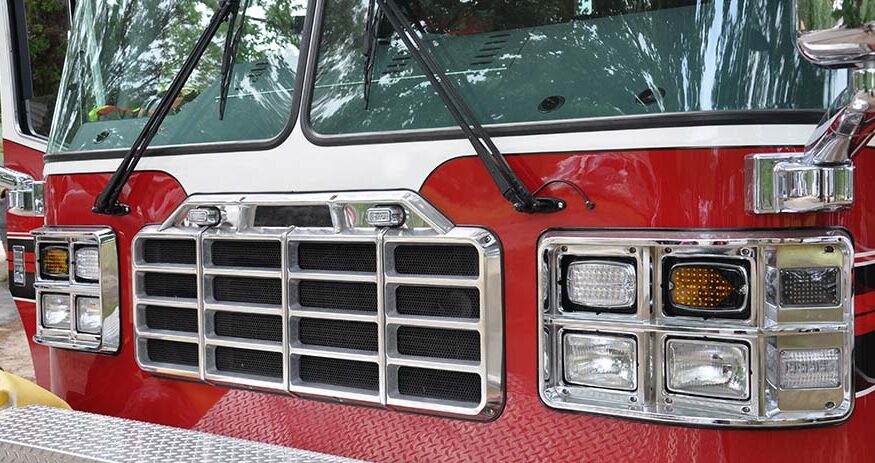
DepositPhotos
Fire truck antitrust lawsuits centralized in Wisconsin
Joe Schulz of Wisconsin Public Radio//April 8, 2026//


 Listen to this article
IN BRIEF
- Federal panel consolidates fire truck antitrust lawsuits in Eastern District of Wisconsin.
- Municipalities allege Oshkosh, REV Group, Rosenbauer inflated prices and restricted competition.
- Lawsuits claim fire truck prices have doubled over the past decade.
Antitrust lawsuits from across the country against three fire truck manufacturers — including two based in Wisconsin — will now be centralized in a federal court in the Badger State.
The U.S. Judicial Panel on Multidistrict Litigation this month ordered at least a dozen cases brought against the manufacturers to be transferred to the U.S. Eastern District of Wisconsin and assigned to Judge William Griesbach for coordinated or consolidated pretrial proceedings.
The suits involve municipalities and fire departments suing Oshkosh Corp., REV Group and Rosenbauer America, which allegedly collectively control between 70 and 80 percent of the U.S. fire truck market.
Oshkosh Corp. is based in Oshkosh with its subsidiary Pierce Manufacturing, which specializes in custom fire trucks, headquartered in Appleton. REV Group is headquartered in Brookfield, and Rosenbauer America is headquartered in South Dakota.
The cases claim the companies are restricting competition and driving up costs for fire departments and municipal governments across the country.
The city of La Crosse filed suit in August 2025, and other municipalities, including Onalaska and Ann Arbor, Michigan, have brought similar claims.
Last year, REV Group and Oshkosh Corp. called La Crosse’s lawsuit meritless, while Rosenbauer America said it strongly disagrees with the suit’s claims.
“The allegations in this lawsuit are without merit, and we are defending ourselves in court,” a spokesperson for Oshkosh Corp. and subsidiary Pierce Manufacturing said in a statement Tuesday. “Oshkosh remains focused on delivering safe, high-quality fire trucks while continuing to reinvest in our U.S. operations to meet record demand.”
Michael Flannery, an attorney for Cuneo Gilbert Flannery & LaDuca, one of the firms in the litigation, said in a statement that fire departments and municipalities are being “forced to pay inflated prices for essential emergency vehicles” due to a “conspiracy” between the companies that control the market.
“Centralizing these cases is an important step toward efficiently advancing the litigation and holding the defendants accountable,” Flannery stated.
The litigation consisted of 12 cases in three different federal district courts, and the Judicial Panel on Multidistrict Litigation was also notified of seven other cases in California, Kansas, Oklahoma and Wisconsin, according to the order.
The suits allege the fire truck makers “engaged in conduct from at least 2016 to the present to substantially lessen competition in the U.S. fire truck industry, artificially inflate prices, and restrain trade, in violation of federal antitrust law,” the order says.
The municipalities and fire departments in all of the cases allege the manufacturers engaged in a conspiracy to raise truck prices by restraining production and exchanging “competitively sensitive information,” according to the order.
A civil complaint consolidating claims from La Crosse, Ann Arbor, Milwaukee, Onalaska and other municipalities filed in March says fire trucks have doubled in price over the last decade.
According to the complaint, a truck that cost $500,000 in the mid-2010s now costs $1 million and a more specialized vehicle that used to cost $900,000 now costs more than $2 million.
“Cost increases and inflation alone do not explain these price increases, which have squeezed municipal budgets and prevented communities from replacing their old Fire Apparatus,” the suit states. “At the same time, wait times for a new Fire Apparatus have ballooned from 18 months in the mid-2010s to more than four years today.”
But industry testimony to a U.S. Senate subcommittee from September 2025 argues price increases and longer lead times have been the result of demand spikes and post-pandemic supply chain and inflation issues.
Pierce Manufacturing Vice President of Sales Dan Meyer testified to the Senate that demand in the fire truck industry was “fairly steady” prior to the COVID-19 pandemic, but “increased to historic levels coming out of the pandemic.”
“We saw global supply challenges and significant inflation that impacted both lead times and prices,” Meyer testified. “As supply chains were strained and costs increased during the pandemic, our customers took a hit, and we did too.”
Jason Shivers, chair of the Emergency Vehicle Management Section of the International Association of Fire Chiefs, also testified to the subcommittee. He said orders for fire trucks were 45 percent higher in 2022 than the average from 2011 to 2019, while the number of trucks shipped was down 9 percent from the 2010s average.
The manufacturers had requested the case be moved to the Northern District of Illinois for consolidated pretrial proceedings. In a legal brief, they argued the Northern District of Illinois was “geographically central” and is “ideal given the nationwide character” of the lawsuits.
The judicial panel ultimately selected the Eastern District of Wisconsin. Oshkosh Corp. and its subsidiary Pierce Manufacturing, as well as the REV Group, are headquartered in the district.
Nine of the 12 cases reviewed are also pending in the Eastern District and the “vast majority of plaintiffs” supported that district as their first or second choice for the transfer, according to the order.
Related Articles
Related Content


Polls
 Loading ...
Legal News
- Supreme Court blocks Trump from firing Fed governor
- Whitefish Bay settles student discrimination lawsuit
- 51 more activists to face Ridglan Farms protest charges
- Judge halts tree clearing at Potawatomi State Park
- Former funeral home owner indicted in Medicaid fraud
- Enbridge settles Wisconsin pipeline spill for $275K
- Supreme Court backs end of protections for Haitians, Syrians
- Wisconsin court upholds Menominee tribal immunity
- Milwaukee prenatal care owner to plead in Medicaid fraud
- Oracle sues PSC over Wisconsin data center rules
- Worker files NLRB charges over union dues dispute
- Canadian gets prison in $1.2M mail fraud scheme
Case Digests
- Equal Protection Clause of the Fourteenth Amendment
- Sufficiency of Evidence-Plain Error
- 6th Amendment-Failure to Prosecute
- Relief from Judgment-Attorney Withdrawal
- Statute of Limitations-Bail Jumping
- Marital Property Division-Competency
- Standing-Marsy’s Law
- Good Faith Covenant-Banking Fees
- Voluntary Consent-Totality-of-the-Circumstances Test
- Class Action Fairness Act-Subject Matter Jurisdiction
- Policy Exclusions-Commercial Crime Bond
- Negligent Misrepresentation-Tortious Interference