Free Newsletter

Under Trump, a ‘presidential penalty’ extends to court races
Craig Gilbert for USA TODAY Network//January 5, 2026//
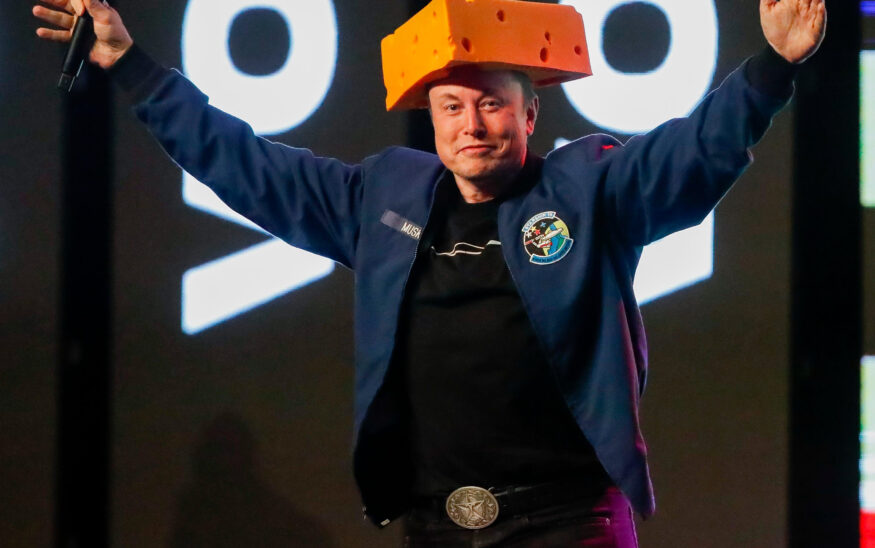
Billionaire Elon Musk wears a cheesehead as he takes the stage during a town hall at the KI Convention Center in Green Bay in March 2025 to drive turnout for the 2025 Supreme Court election. (Tork Mason/USA TODAY NETWORK-Wisconsin)
Under Trump, a ‘presidential penalty’ extends to court races
Craig Gilbert for USA TODAY Network//January 5, 2026//


Wisconsin exemplifies a powerful pattern in modern American politics.
The party that wins the presidency does a lot of losing in the elections that follow. Some scholars call it the “presidential penalty.”
When Republican George W. Bush was president (2001-2009), Democrats won both races for governor in Wisconsin.
When Democrat Barack Obama was president (2009-2017), Republicans won three elections for governor and their first U.S. Senate races since the 1980s.
And under Republican President Donald Trump, Democrats reclaimed the governor’s office and have a chance this fall to end a 15-year GOP lock on the state Legislature.
It doesn’t end there, however.
The election woes of the president’s party have taken on an added dimension in the Trump era.
Here in battleground Wisconsin, we may be seeing a “presidential penalty” not just in fall partisan races, but in Wisconsin’s most important nonpartisan elections, the April contests for state Supreme Court. Nothing like it has happened in the modern era. This is a new political phenomenon.
Consider the four contested high court elections in Wisconsin during Trump’s two terms.
Conservatives (with Republican backing) won one race by half a point in 2019 but lost the other three by double digits in 2018, 2020 and 2025. If this liberal edge continues and conservative Supreme Court candidate Maria Lazar loses to liberal Chris Taylor this April, the court will have its strongest liberal majority in anyone’s memory, and conservatives will have lost five of the past six Supreme Court races in Wisconsin, mostly in blowouts.
Are conservative struggles in recent court races entirely attributable to Trump?
Not by any means. The quality of the candidates, outside spending, and the campaigns themselves have played a central role, as they always do.
But I think it’s undeniable that Trump has had a bigger impact on Wisconsin court races than his presidential predecessors did, and a uniquely negative one for his own side.
How court races played out in prior administrations
Here is a quick recap of how these court races have gone under earlier presidents.
In Democrat Joe Biden’s single term, his “side” (liberals) won the only court race that took place. That 2023 contest tipped the court majority from conservative to liberal.
During Democrat Obama’s two terms, his “side” (liberals) lost three contested court races. But one of those losses was by less than a point, and liberals won two races of their own by double digits.
During Republican George W. Bush’s two terms, his “side” (conservatives) won all three contested court races — a stark contrast to how conservative court candidates have fared under Trump.
And when Democrat Bill Clinton was president, liberal, conservative and moderate candidates all won contested court races.
In short, under these previous presidents, there was nothing resembling the “presidential penalty” that we’ve seen in court races during Trump’s two terms.
So, what explains that?
I would point to three major factors.
One essential factor is that nonpartisan court races have become increasingly partisan, and dramatically so in the past 10 years. In previous decades, the political lines weren’t nearly as stark as they are today. There were judicial candidates who had backing from key figures in both parties. There were candidates who had no clear liberal or conservative background.
The court itself was less polarized, so these labels weren’t as meaningful. Uncontested court races were more common: there were four uncontested Supreme Court elections in a row in the 1980s when Republican Ronald Reagan was president, and three uncontested races during George W. Bush’s presidency.
In this earlier world, you couldn’t begin to talk about a presidential penalty in court elections because partisanship played a far smaller role in them.
Over time, however, the parties have become more involved and more explicit about which judicial candidates they support. Far more partisan money and advertising have flowed into these races. The messages have become more political.
And voters in our increasingly polarized political culture have treated spring judicial elections more like fall partisan elections, with Democratic voters more consistently backing the liberal candidate and Republican voters more consistently backing the conservative one.
Court races now more partisan, nationalized
These conditions are what makes it possible for a nonpartisan April court race to be influenced by which party occupies the White House. These court races are not only more partisan today but have even been “nationalized” in a way they never were before.
There is no better example of this than what happened last April, when billionaire Elon Musk and Trump became the central figures in a titanic Wisconsin court race that shattered records for spending and voter turnout. Liberal Susan Crawford won that contest by 10 points.
Another example is the 2023 court race won handily by liberal Janet Protasiewicz, which unfolded in the aftermath of the Dobbs decision by the U.S. Supreme Court overturning the federal right to abortion established in Roe v. Wade. That election occurred when Biden was president, but Trump helped shape the outcome, because his three appointees to the court were integral to the Dobbs ruling. In a sense, conservatives suffered a “Trump penalty” in that contest as well.
There are at least two other factors that help explain why the Trump presidency has not only influenced the outcome of court races but had a negative impact on Trump’s own party.
One is that Trump has been an unusually confrontational and polarizing president, utterly dominating the political arena and the public’s attention. You would expect such a president to have more impact on elections for other offices.
In political science, the term “presidential penalty” typically refers to the idea that the president’s party loses ground in the midterms because voters are trying to check the president’s power. That would seem to fit here, at least in the 2025 court race that became almost a referendum on Trump. For some voters, Trump is the frame through which they view elections even when he’s not on the ballot. But I am using “presidential penalty” more broadly here to refer to the president’s drag on his own party’s election prospects once in office.
One other way that can happen involves turnout. Voters in the party out of power are especially angry and often more motivated than voters in the president’s party. And this seems to be an important factor in Wisconsin’s court elections in the Trump era, driving up Democratic turnout.
One final factor at work is partisan realignment. Republicans have lost ground among college-educated voters and gained ground among non-college voters. This education divide also has implications for turnout, because in lower-turnout elections (like spring judicial races), voters with higher levels of education historically participate at higher rates.
The education divide began before Trump. But it has intensified in the Trump era. And that helps explain how conservatives could lose four of the past five Supreme Court elections by large margins in a state that is typically a nail biter in November. The spring electorate now tilts in a Democrat direction.
Are we now in a new era in court races, when the party of the president will be just as vulnerable to election setbacks as it has been in the November midterms?
Maybe, but like many things about our politics, it’s hard to know what the world post-Trump is going to look like.
Some of the factors cited above look enduring: the partisanship of nonpartisan court contests, the polarization of our political culture, the nationalization of state elections.
But not all future presidents are going to be as omnipresent in our elections as Trump has been. And the partisan realignment that has hurt the president’s party in lower-turnout elections under Trump would on paper help the president’s party in these elections when a Democrat is in the White House.
Whatever the world looks like a decade from now, we have witnessed the transformation of judicial politics in Wisconsin in the Trump era. The nature of these elections has changed. And the outcomes have changed.
After an era when conservatives led the court and enjoyed the upper hand in court elections, now liberals do. And as he has in so many other dimensions of our politics, Donald Trump has been at the heart of the story.
Related Articles
Related Content


Polls
 Loading ...
Legal News
- Dugan seeks leniency before ICE obstruction sentence
- Milwaukee County weighs legal action over ICE park staging
- WEC says Green Bay clerk likely violated election law
- DPI sued over $34,000 open records fee
- Green Bay duplicate ballots spark new GOP complaint
- DOJ seeks to join Wisconsin ICE detainer case
- Wisconsin joins egg price-fixing settlement
- Supreme Court rejects Trump’s birthright citizenship order
- Green Bay probes duplicate absentee ballot error
- Clerks: Absentee ballots sent out without issue
- Supreme Court blocks Trump from firing Fed governor
- Whitefish Bay settles student discrimination lawsuit
Case Digests
- Equal Protection Clause of the Fourteenth Amendment
- Sufficiency of Evidence-Plain Error
- 6th Amendment-Failure to Prosecute
- Relief from Judgment-Attorney Withdrawal
- Statute of Limitations-Bail Jumping
- Marital Property Division-Competency
- Standing-Marsy’s Law
- Good Faith Covenant-Banking Fees
- Voluntary Consent-Totality-of-the-Circumstances Test
- Class Action Fairness Act-Subject Matter Jurisdiction
- Policy Exclusions-Commercial Crime Bond
- Negligent Misrepresentation-Tortious Interference