Free Newsletter

Madison challenges elections panel over ballot rules
MaryBeth Matzek, Freelance Editor//August 12, 2025//
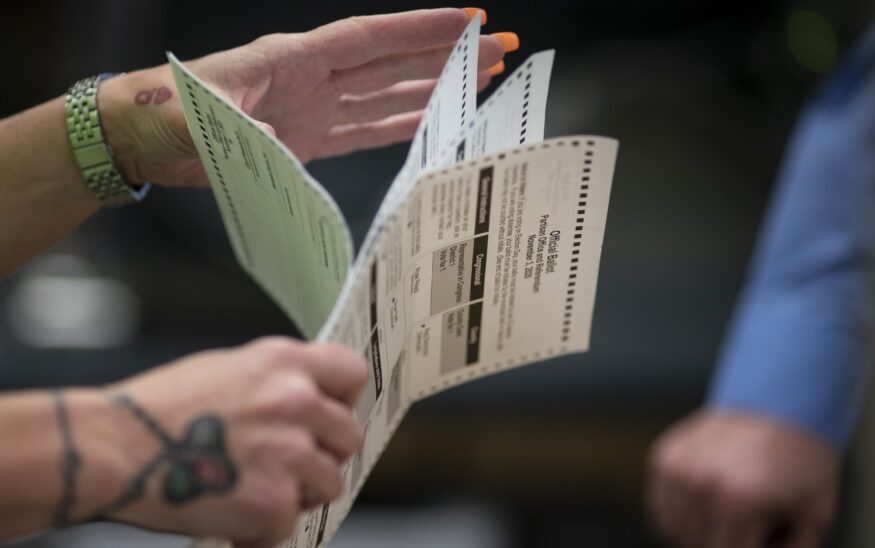
AP Photo/Wong Maye-E, File
Madison challenges elections panel over ballot rules
MaryBeth Matzek, Freelance Editor//August 12, 2025//


IN BRIEF
- Madison questions commission’s authority to impose new voting rules.
- Dispute follows 193 absentee ballots left uncounted in 2024.
- City attorney warns changes could disrupt absentee ballot processing.
The City of Madison is questioning whether the Elections Commission can force it to take additional steps to ensure absentee ballots are properly counted without requiring other Wisconsin communities to do the same.
City Attorney Mike Haas, who’s also serving as clerk, sent a letter to the commission pushing back on the requirements that the group plans to vote on this Friday. Besides questions about the commission’s authority, Haas wrote the proposals don’t take into account the steps the city has taken since it failed to count 193 absentee ballots cast in the November 2024 election.
In the letter, Haas asked the commission to seek an opinion from the attorney general or the Legislature’s attorney on whether it has the power to impose the steps that are scheduled to come before the panel on Friday.
“When the Commission is presented with an error that can be corrected in real time, such as a decision whether to certify nomination papers or to order a recall election, the Commission is well within its authority to order local officials to take immediate action to conform their conduct to the law,” Haas wrote. “But regardless of whether there is still an opportunity to fix the error (and here there is not), the Commission’s authority does not extend to requiring the future implementation of specific procedures in excess of those required in the statutes.”
In July, the Elections Commission voted 5-1 to affirm a report finding the former Madison clerk who failed to count 193 absentee ballots broke five election laws. But it stopped short of adopting proposed orders requiring the city clerk’s office to take corrective actions, putting that off until a meeting scheduled for this Friday.
One corrective order, for example, would direct the city to print poll books no later than the Thursday before the election. The commission’s review found Madison failed to prepare the poll books in a way that would’ve helped reveal the 193 absentee ballots that had been returned.
Haas argued that waiting until the Thursday before the election could create challenges for the city. He said for the spring election, Madison placed its printing order on a Tuesday, receiving its poll books back on a Friday. Moving up the day by two additional days would leave less time to mark late-arriving absentee ballots in the books so poll workers knew who already cast their absentee ballots.
Haas argued if the commission wants to dictate local operations “at such a granular level,” it should be done through state law or the administrative rules process after hearing input from local officials.
Related Articles
Related Content






Polls
 Loading ...
Legal News
- Dugan seeks leniency before ICE obstruction sentence
- Milwaukee County weighs legal action over ICE park staging
- WEC says Green Bay clerk likely violated election law
- DPI sued over $34,000 open records fee
- Green Bay duplicate ballots spark new GOP complaint
- DOJ seeks to join Wisconsin ICE detainer case
- Wisconsin joins egg price-fixing settlement
- Supreme Court rejects Trump’s birthright citizenship order
- Green Bay probes duplicate absentee ballot error
- Clerks: Absentee ballots sent out without issue
- Supreme Court blocks Trump from firing Fed governor
- Whitefish Bay settles student discrimination lawsuit
Case Digests
- Equal Protection Clause of the Fourteenth Amendment
- Sufficiency of Evidence-Plain Error
- 6th Amendment-Failure to Prosecute
- Relief from Judgment-Attorney Withdrawal
- Statute of Limitations-Bail Jumping
- Marital Property Division-Competency
- Standing-Marsy’s Law
- Good Faith Covenant-Banking Fees
- Voluntary Consent-Totality-of-the-Circumstances Test
- Class Action Fairness Act-Subject Matter Jurisdiction
- Policy Exclusions-Commercial Crime Bond
- Negligent Misrepresentation-Tortious Interference