Free Newsletter

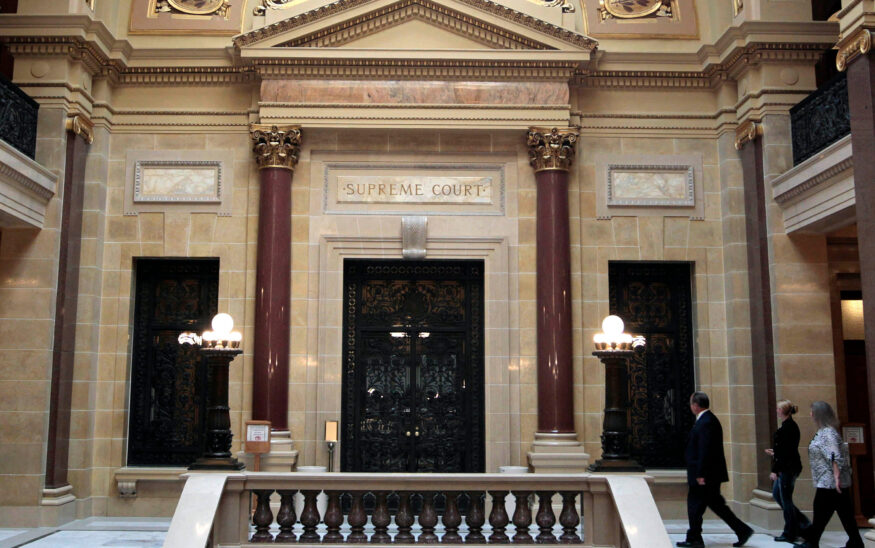
(USA Today Network)
Wisconsin Supreme Court ends minority college grants
USA Today Network//June 18, 2026//


IN BRIEF
- Wisconsin Supreme Court unanimously ruled the Minority Undergraduate Retention Grant program is unconstitutional.
- The court found restricting grants to certain racial and ethnic groups violated Wisconsin’s equal protection guarantees.
- The lawsuit was brought by the Wisconsin Institute for Law & Liberty (WILL) on behalf of Madison residents whose son was ineligible for the grants.
The state Supreme Court unanimously ruled a Wisconsin college grant program restricted to certain students of color was unconstitutional and ordered the state to end administering the program.
The Wisconsin Institute for Law & Liberty, a law firm representing conservative interests, sued the state board that awards scholarships and loans to college students over its taxpayer-funded Minority Undergraduate Retention Grant program in 2021. State law restricts program eligibility to African American, American Indian, Hispanic and some Southeast Asian students.
“This is a major win for students,” Dan Lennington, deputy counsel for WILL, said in a statement. “Race cannot be used to dole out scholarships and other financial aid. This is also a big win for taxpayers, who can now challenge many other race-based programs in state court. WILL is proud to stand for equal rights and make that case everywhere we can.”
The law firm had argued the program criteria amounted to racial discrimination because students who are Thai, Chinese, Japanese, Indian, North African, Native Hawaiian, Pacific Islander or white don’t qualify. The firm argued this violates the clause of the state Constitution that says everyone is equal.
The firm sued on behalf of several Madison residents, including Konkanok Rabiebna and Richard Freihoefer of Madison. Rabiebna is from Thailand, and Freihoefer is white. Their biracial teenage son does not qualify for the grant program.
The Higher Educational Aids Board that administers the grants said the grants equalized opportunity among students, and later argued the plaintiffs lacked standing to bring the case. The agency did not immediately return a request for comment on the Supreme Court ruling.
A circuit court ruled in favor of the agency, but an appeals court overturned the decision. The state Supreme Court – which has a 4-3 liberal majority – sided with the appeals court in a June 18 decision.
The three conservative justices – Annette Ziegler, Rebecca Grassl Bradley and Brian Hagedorn – were joined by liberal justice Janet Protasiewicz. Liberal justices Jill Karofsky and Rebecca Dallett filed concurring opinions, which justice Susan Crawford joined.
Karofsky said she was bound by a 2023 U.S. Supreme Court ruling banning the consideration of race from college admissions decisions. Still, she wanted to note that despite Wisconsin’s constitutional guarantee of equal educational opportunity for all, the state landscape is still unequal.
Wisconsin has the nation’s widest math and reading achievement gaps between White and Black students. Students of color are more likely to be referred for disciplinary action, and Black students are less likely to graduate.
Established in the 1980s, the minority grant program was intended to help students of color who face barriers to pursuing a college degree. Research shows Black and Hispanic students are more likely to drop out and less likely to graduate compared to their white peers. Black students who earn a degree also accumulate more debt.
The grants were awarded based on financial need and available to students attending a technical college, tribal college or private nonprofit school. A similar grant program serves students attending a University of Wisconsin System institution.
In the 2023-24 school year, the Higher Educational Aids Board awarded nearly $800,000 in grants to 770 students. Students could receive up to $2,500 per year to defray the cost of college.
Related Articles
Related Content





Polls
 Loading ...
Legal News
- Judge: Wisconsin absentee voting violates ADA
- Appeals court rules Enbridge Line 5 is trespassing
- Green Bay city clerk resigns amid absentee ballot scrutiny
- Former Epic employee sues over noncompete agreement
- Supreme Court approval remains below 50%, poll finds
- AI transforms family law but raises new legal concerns
- Illinois man gets prison for $1.2M employment tax fraud
Case Digests
- Termination of Parental Rights-Reasonable Efforts
- Family Law- Appellate Procedure
- Involuntary Administration of Medication-Mootness Exception
- Voluntary Consent to blood Draw- -Fourth Amendment
- Expert Testimony-Medical Malpractice
- Habeas Corpus-Bond Eligibility-Immigration Detention
- Fair Credit Reporting Act
- Copyright Infringement-Tortious Interference
- Tribal Land Trespass-Unjust Enrichment
- Fourth Amendment-Automobile Exception
- Age Discrimination in Employment Act-But For Causation
- Class-of One Equal Protection Claim-Breach of Contract
Legal Tech
- AI is reshaping family law practice, but attorneys worry about DIY research
- Massachusetts court rejects work product protection for AI documents by girlfriend
- Exterro launches on-premises AI platform for digital forensics


.png)