Free Newsletter

JOB CITES: Joint employer liability in the employment discrimination context
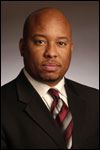 Can an employer be held liable for acts of employment discrimination carried out by another employer? The quick, lawyerly answer is ... it depends.
JOB CITES: How to interpret the NLRB’s latest take on social media
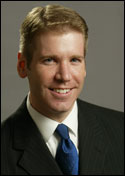 When employees get fed up at work, they increasingly turn to social media to air their gripes.
JOB CITES: No luck required for employers that follow tip pool law
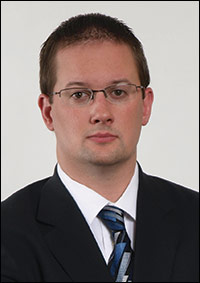 You’ve got to ask yourself one question: Is my practice of tip pooling rendering my use of the minimum wage tip credit improper?
JOB CITES: High court’s decision will impact how lawyers defend employment claims
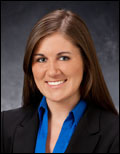 The U.S. Supreme Court is set to decide a case that may have a significant impact on how employers approach defending claims under multiple federal employment laws.
JOB CITES: The EEOC and you
 For employers who have had the good fortune not to face an employment discrimination claim — a development that can seem like a matter of when rather than if depending on how long you’ve been in business and how many employees you have — the dealings with a governmen[...]
JOB CITES: Don’t be afraid to care about subordinates
A friend recently shared with me that she was “afraid to care” when it came to the subordinates she encounters on a daily basis. Especially during this holiday season, it struck me as a sad commentary on what the exponential growth of lawsuits has done to the important interpersonal and professional relationships in the workplace.
JOB CITES: Don’t be fooled: Labor laws apply to nonunion employers
Consider the following scenario: You are a nonunion employer who has just conducted an internal investigation into a harassment complaint by an employee (let’s call her Monica).
JOB CITES: Shhh … Can I make her keep a secret?
 The task of conducting internal investigations may have just gotten a bit more difficult.
JOB CITES: A post-Oktoberfest chaser on voting leave
I recently returned from Oktoberfest. And no, I am not talking about the Oktoberfest held in La Crosse -- I am talking about the real deal in München, Germany.
JOB CITES: The art of defending unemployment claims
A common dilemma for employers is contesting an unemployment claim now and possibly a discrimination claim by the same former employee later.
JOB CITES: Being aware of ‘anti-fat prejudice’ is worth its weight
A good friend of mine -- not named Warren -- is around 5-foot-9 with boots on, and over the last few years or so has fluctuated between 185 and 200 pounds.
JOB CITES: The other office politics
 Over the years, I have noticed that there are two general questions I receive when people find out I practice employment law.
Polls
 Loading ...
Legal News
- Wisconsin Supreme Court justices question how much power Legislature should have
- Milwaukee’s Common Council now has the most African Americans, women and openly LGBTQ members ever
- Office of School Safety Provides Behavioral and Threat Assessment Management Training Ahead of 25th Anniversary of Columbine Shooting
- Wisconsin Supreme Court to hear arguments in Democratic governor’s suit against GOP-led Legislature
- Lawsuit asks Wisconsin Supreme Court to strike down governor’s 400-year veto
- Wisconsin man pleads not guilty to neglect in disappearance of boy
- ACS Selects University of Wisconsin Law School’s Miriam Seifter for 2024 Ruth Bader Ginsburg Scholar Award
- People with disabilities sue in Wisconsin over lack of electronic absentee ballots
- Wisconsin Republicans ignore governor’s call to spend $125M to combat ‘forever chemicals’
- Native American voices are finally factoring into energy projects
- Steven Avery prosecutor Ken Kratz admits ‘mistakes were made’
- Colombian national extradited to Milwaukee faces International narcotics-trafficking conspiracy charge
WLJ People
- Power 30 Personal Injury Attorneys – Russell Nicolet
- Power 30 Personal Injury Attorneys – Benjamin Nicolet
- Power 30 Personal Injury Attorneys – Dustin T. Woehl
- Power 30 Personal Injury Attorneys – Katherine Metzger
- Power 30 Personal Injury Attorneys – Joseph Ryan
- Power 30 Personal Injury Attorneys – James M. Ryan
- Power 30 Personal Injury Attorneys – Dana Wachs
- Power 30 Personal Injury Attorneys – Mark L. Thomsen
- Power 30 Personal Injury Attorneys – Matthew Lein
- Power 30 Personal Injury Attorneys – Jeffrey A. Pitman
- Power 30 Personal Injury Attorneys – William Pemberton
- Power 30 Personal Injury Attorneys – Howard S. Sicula