Free Newsletter


Dropbox ate my discovery requests: The current law on electronic service of legal documents
Imagine this: You’re a lawyer representing one of many defendants in a new lawsuit. You receive an email from the plaintiff’s lawyers, addressed to you as well as counsel for 19 other defendants. All that’s in the email is a link to a Dropbox folder, which contains 20 sets of discovery requests (one to each defendant).

Protecting confidential information in e-discovery
For many years, courts and commentators have acknowledged that the attorney-client privilege is the most important privilege in our legal system.

TAR software can help lawyers out of document mire
Thanks to computers, the days of flipping through stacks of paper documents are over.

LEGAL CENTS: Marketing in a mobile world
For many people, the smartphone has become almost a new appendage.

The case for digital forensics
Digital forensics has become such a part of Timothy Edwards’ practice that he makes sure to have an analyst next to him during depositions.
An e-ducation: Everything you need to know about e-discovery
The term e-discovery has been around long enough to have become part of the vernacular. But do you know as much as you think you do about electronic discovery?
Change is about to shift into overdrive in law
In 1996, Richard Susskind declared that someday, email would be the primary means of communications for legal professionals — a prediction that was greeted with scorn by attorneys and industry observers.
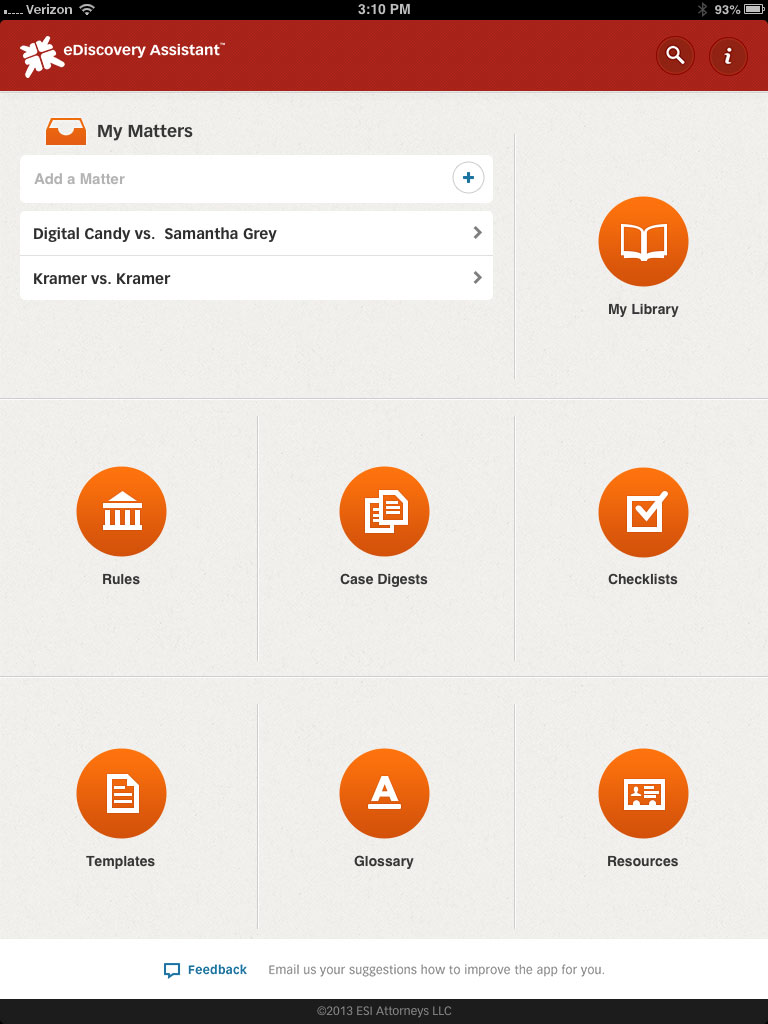
BEV BUTULA: Discover the e-Discovery Assistant app
e-Discovery Assistant is a subscription-based iPad app that was introduced in July. The application is the brainchild of former Quarles & Brady partner Kelly Twigger, who founded ESI Attorneys, a firm specializing in e-discovery and information law, in 2009.
Rule changes would deal with discovery
Lawyers are concerned that discovery is getting out of hand.

Hot topics in e-discovery
 Ever-evolving and constantly growing, electronic discovery presents a variety of challenges for litigators.
Lawyers predict boom in computer-assisted document review
Less than one year after a federal court judge issued a seminal electronic discovery decision blessing the use of computer-assisted review, the technology is already appearing in courts across the country.
What you need to know about e-discovery in 2013
Reflecting the always-changing world of technology, electronic discovery presents new challenges for lawyers in 2013. At the forefront: social media evidence, smartphone data and the judicial blessing of a new form of discovery review.
Polls
 Loading ...
Legal News
- Chicago man sentenced to prison after being caught with ‘Trump Gun’
- FTC bans non-competes
- Gov. Evers seeks applicants for Dane County Circuit Court
- Milwaukee man charged in dismemberment death pleads not guilty
- Democratic-led states lead ban on the book ban
- UW Madison Professor: America’s child care crisis is holding back moms without college degrees
- History made in Trump New York trial opening statements
- Prosecutor won’t bring charges against Wisconsin lawmaker over fundraising scheme
- Republican Wisconsin Senate candidate says he doesn’t oppose elderly people voting
- Vice President Harris to reveal final rules mandating minimum standards for nursing home staffing
- Election workers fear threats to their safety as November nears
- Former law enforcement praise state’s response brief in Steven Avery case
WLJ People
- Power 30 Personal Injury Attorneys – Russell Nicolet
- Power 30 Personal Injury Attorneys – Benjamin Nicolet
- Power 30 Personal Injury Attorneys – Dustin T. Woehl
- Power 30 Personal Injury Attorneys – Katherine Metzger
- Power 30 Personal Injury Attorneys – Joseph Ryan
- Power 30 Personal Injury Attorneys – James M. Ryan
- Power 30 Personal Injury Attorneys – Dana Wachs
- Power 30 Personal Injury Attorneys – Mark L. Thomsen
- Power 30 Personal Injury Attorneys – Matthew Lein
- Power 30 Personal Injury Attorneys – Jeffrey A. Pitman
- Power 30 Personal Injury Attorneys – William Pemberton
- Power 30 Personal Injury Attorneys – Howard S. Sicula